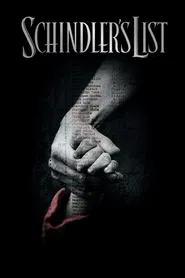
Schindler’s List
Genre: Drama, history,War Country: United States Director: Steven Spielberg Cast: Liam Neeson, Ben Kingsley, Ralph Fiennes, Caroline Goodall, Jonathan Sagall, Embeth Davidtz, Małgorzata Gebel, Shmuel Levy, Mark Ivanir, Béatrice Macola, Andrzej Seweryn, Friedrich von ThunSteven Spielberg’s Schindler’s List (1993) is one of the most powerful films ever. It turns a historical tragedy into a deeply human story about moral awakening and redemption. The film, based on Thomas Keneally’s novel Schindler’s Ark , tells the true story of Oskar Schindler. He was a German industrialist and a Nazi Party member.
Schindler saved over 1,100 Jews from the Holocaust by hiring them in his factories. Spielberg’s direction blends history with deep emotions. This film goes beyond simple facts and becomes a powerful reflection on humanity in the face of great cruelty.
At its heart, Schindler’s List is a historical record and an ethical inquiry. It tackles evil not with drama but through quiet, unyielding realism. The film, mostly in black and white, removes cinematic tricks.
It immerses viewers in the harsh reality of the Holocaust. It’s not just one of Spielberg’s best works; it’s also a major gift to world cinema. This film educates, disturbs, and inspires many generations.if you want to see more movies like this then see top rated movies.
Storyline & Structure
The film tells the story of Oskar Schindler (Liam Neeson), a smooth and savvy businessman. He arrives in Kraków at the start of World War II, hoping for wealth and status. At first, Schindler is driven by profit. He takes advantage of wartime conditions to make his fortune.
He hires Jewish workers because they are cheap, expendable, and plentiful due to Nazi rule. As the atrocities around him intensify, Schindler undergoes a gradual transformation. Opportunism becomes compassion. He protects his Jewish workers, even though it costs him a lot personally and financially.
Spielberg builds the film’s story with great care. He weaves personal tales of suffering and resilience into a larger historical context. The structure balances Schindler’s moral journey with the harsh reality of the Holocaust. This creates a rhythm that shifts between horror and grace. Each act in the film shows Schindler’s evolving conscience.
He shifts from being detached to defiant, and from an observer to a saviour. The story reaches its emotional peak through human connection, not spectacle. Schindler’s tears at the end show how empathy triumphs over indifference. If you want to see story movie then watch on our listed movie The God Father2 on Gomovies.
Cast Performances & Characterization
Liam Neeson delivers a career defining performance as Oskar Schindler. His portrayal shows the struggles of a flawed man facing a moral crisis a hedonist who turns into a reluctant hero. Neeson’s strong presence and emotional shifts paint a picture of redemption. It feels real and truly moving. He highlights Schindler’s contradictions: charm and guilt, calculation and compassion, ambition and remorse.
Ralph Fiennes’ performance as Amon Goeth, the sadistic Nazi commandant of the Plaszów labor camp, is equally unforgettable. Fiennes delivers a chilling portrayal of Goeth’s cruelty, making him one of cinema’s scariest villains. His portrayal isn’t just evil; it’s disturbingly human. It shows how ideology and power can twist a person’s conscience.
Ben Kingsley as Itzhak Stern provides the film’s moral center, grounding the narrative in quiet integrity. Stern’s subtle performance makes him Schindler’s conscience and a quiet witness to the film’s moral growth. Together, these performances elevate the story beyond history, into the realm of timeless human truth. This is our best history or drama movie The Smashing Machine
on Gomovies.
Action Sequences & Choreography
Schindler’s List isn’t an action film in the usual way. Still, its scenes of violence are crafted with striking precision. Spielberg’s restraint enhances rather than diminishes the impact. The liquidation of the Kraków ghetto one of the film’s most searing sequences is staged with documentary like immediacy.
Chaos breaks out: soldiers shout, families run, and gunfire rings through the cobblestone streets. Spielberg shows how random violence dehumanises people. Each frame highlights life’s fragility under tyranny.
The film’s pacing alternates between moments of unbearable tension and quiet introspection. Scenes of brutality aren’t stylized. They show a harsh realism that makes viewers face the everyday nature of evil.
The choreography of violence, such as Goeth’s casual murders and the terror of deportation trains, lacks any cinematic glamour. Every act of cruelty shows the moral decline of the person doing it. This stands in sharp contrast to Schindler’s increasing humanity.
Visuals, Sound, and Technical Elements
Janusz Kamiński’s cinematography is central to the film’s haunting power. The black and white visuals remind us of wartime photos and newsreels. They help anchor the story in real history. Removing colour cuts out distractions.
This lets the moral contrasts good and evil, compassion and cruelty take centre stage. The rare use of colour, especially the red coat of a young girl in the Kraków ghetto, stands as a powerful symbol of innocence lost during genocide.
John Williams’ Oscar winning score, along with Itzhak Perlman’s moving violin solos, adds to the film’s emotional depth. The music doesn’t manipulate; it mourns. It echoes the sadness of lives lost too soon. Spielberg uses sound to boost realism.
The rhythmic clatter of machines in Schindler’s factory stands out against the heavy silence of mass graves. Editing, production design, and historical accuracy come together to create an immersive experience. It honours the truth but also goes beyond it through artistry.
Underlying Themes & Series Connections
At its heart, Schindler’s List is a meditation on morality, conscience, and the potential for goodness within darkness. The film asks fundamental questions: What compels a person to act in the face of evil? How much is one life worth?
In Schindler’s transformation, Spielberg shows how empathy can redeem. One compassionate person can change history. The narrative embodies the Talmudic quote that closes the film: “Whoever saves one life, saves the world entire.”
Schindler’s List shows the peak of Spielberg’s journey to understand humanity in crisis. Earlier films like E.T. and Close Encounters of the Third Kind celebrated human connection in magical settings. In contrast, Schindler’s List faces it during humanity’s darkest hour.
The film’s legacy extends beyond cinema, serving as an educational tool and a moral reckoning. Spielberg later used this impact to create the Shoah Foundation. It keeps the voices of Holocaust survivors alive, supporting the film’s mission in the real world.
Critical Response & Audience Reactions
When it came out, Schindler’s List earned wide praise and quick recognition as a major achievement in film. Critics hailed it as Spielberg’s magnum opus a work of profound artistic and moral courage.
It won seven Academy Awards, such as Best Picture, Best Director, and Best Cinematography. It’s often called one of the greatest films ever made. Reviewers liked its honest approach and its straightforwardness. They appreciated the blend of emotional depth and historical scope.
Audiences around the world responded with reverence. The film’s powerful realism and emotions sparked global talks about memory, responsibility, and how art shows genocide. Survivors and historians praised its authenticity. Educators also embraced it as a key tool for Holocaust studies.
its impact was so deep that screenings often ended in silence. This was a shared recognition of the seriousness of what everyone had seen. Decades later, Schindler’s List still resonates. It’s more than just a film; it’s a moral reminder of humanity’s ability for both destruction and compassion.
Highlights
Among the film’s unforgettable moments, the liquidation of the Kraków ghetto stands as one of cinema’s most devastating sequences. Spielberg chose to film in sharp black and white, with a bright red coat worn by a small girl.
This contrast shows the deep loss of innocence during the Holocaust. The image of that red coat, later seen lifeless among corpses, has become one of the most iconic symbols in film history.
Equally powerful is the film’s closing act, when Schindler, faced with the war’s end, breaks down in remorse, lamenting that he could not save more lives. “I could have got more,” he weeps a moment of raw humanity that encapsulates the film’s moral gravity.
The final scene has Holocaust survivors and their descendants adding stones to Schindler’s grave in Jerusalem. This moment goes beyond film, linking cinema and history in a powerful act of remembrance.
Shortcomings
Schindler’s List is widely praised, but it has faced some critique. The main concern is how to represent atrocity in narrative cinema. Some scholars argue that the film sticks to traditional storytelling.
This might impose order on chaos, which could unintentionally make horror more aesthetic. Some say Spielberg’s sentimental touch, especially at the end, makes the film’s tough realism feel a bit softer.
But these criticisms are small compared to the film’s historical and emotional authenticity. Spielberg handles the material with care and respect. He makes sure every image reveals truth, not just showiness.
The film’s focus on human dignity, even in great despair, balances out any sense of romanticism in the story. Its accessibility is its strength. It lets generations face the Holocaust’s enormity in a personal way.
Overall Assessment
Schindler’s List remains one of the most significant works in the history of cinema an artistic triumph and a moral testament. Spielberg’s skill isn’t in grandiosity but in detail. He creates a film that clearly and compassionately addresses the darkest times in human history. It is both a tribute and a warning. This film calls for empathy and reflection, not just passive viewing.
Three decades after its release, its relevance has only deepened. In a time when memories fade, Schindler’s List stands out as a vital truth telling film. It shows how cinema can tell stories when words fall short.
It is not merely a film to be admired but one to be felt, confronted, and remembered. Through its unflinching portrayal of humanity’s depths and heights, it achieves what few films dare: moral immortality.
Score / Rating Summary
Gomovies gives:
- Direction: 10 / 10
- Acting Performances: 10 / 10
- Cinematography: 9.9 / 10
- Screenplay & Structure: 9.8 / 10
- Music & Sound Design: 9.8 / 10
- Emotional Impact: 10 / 10
- Historical Authenticity: 10 / 10
- Overall Rating: ⭐ 9.9 / 10
- Schindler’s List is a landmark in storytelling and moral insight. It goes beyond film to show compassion in crisis. This movie teaches us the importance of remembrance.