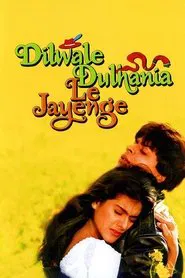
Dilwale Dulhania Le Jayenge
Genre: Comedy, Drama, Romance Country: India Director: Aditya Chopra Cast: Kajol, Shah Rukh Khan, Amrish Puri, Farida Jalal, Anupam Kher, Pooja Ruparel, Parmeet Sethi, Satish Shah, Mandira Bedi, Achala Sachdev, Himani Shivpuri, Karan JoharDilwale Dulhania Le Jayenge (1995), or DDLJ, is one of the most beloved romantic films in Indian cinema, and its legacy is impossible to separate from the history of modern Bollywood itself. Directed by Aditya Chopra in his debut and powered by Shah Rukh Khan and Kajol’s unforgettable chemistry, the film turned youthful romance into something larger, warmer, and more culturally resonant. For readers browsing the GoMovies, it remains a must-read title because it is not just a movie but a cultural event that still defines how audiences talk about love, family, and destiny.
What makes this Dilwale Dulhania Le Jayenge review endure is the way it balances charm with emotional seriousness. On one side, it is playful and romantic, filled with music, flirtation, and bright travel energy. On the other, it is deeply rooted in family values, migration identity, and the tension between freedom and tradition. That combination gives the film an emotional reach that extends far beyond standard romance. It belongs naturally in the Popular Movies category because it helped shape the very language of Bollywood love stories.
The film also matters because it arrived at a time when Indian cinema was shifting toward a more global, diasporic sensibility. DDLJ spoke to audiences in India and abroad by showing how love can survive geography, social pressure, and generational expectation. It became a phenomenon not just because it was romantic, but because it understood what romance meant to a changing generation. Its long theatrical run and enduring popularity prove that its emotional rhythm still connects.
Storyline & Structure
The story follows Raj and Simran, two young Indians living in London whose lives intersect during a European trip. What begins as a playful, lightly combative meeting slowly turns into affection, and then into love. The twist, of course, is that Simran is already promised to another man in India, which immediately turns the romance into a story about timing, family, and moral responsibility.
The structure is one of the film’s cleverest qualities. The first half is light and breezy, using travel, teasing, and accidental connection to build chemistry. The second half becomes more rooted and emotional, shifting the setting from Europe to Punjab and transforming the story from flirtation into a test of values. That tonal shift works because the film is not just telling a love story; it is comparing two worlds and asking whether they can be reconciled.
Aditya Chopra’s screenplay gives the film a clean, two-part emotional shape. The European section represents freedom, spontaneity, and the romance of possibility. The India section represents duty, social order, and the realities of family approval. Instead of making those two halves feel disconnected, the film uses them to show how love matures when it is challenged by consequence.
That structure also gives the movie real rewatch value. The jokes, songs, and playful scenes become more meaningful when viewed alongside the emotional seriousness of the final act. DDLJ is not simply a love-at-first-sight romance. It is a story about whether love can remain playful once it becomes responsible.
If you enjoy genre-defining films that become part of cultural memory, you may also appreciate The Dark Knight and War of the Worlds, both of which shaped audience expectations in their own categories the way DDLJ shaped romance.
Cast Performances & Characterization
The Dilwale Dulhania Le Jayenge cast is led by Shah Rukh Khan, whose performance as Raj Malhotra remains one of the defining turns of his career. Raj is mischievous, confident, and deeply charming, but Khan gives him enough sincerity that he never becomes a shallow flirt. He feels modern without losing emotional depth, which is a big part of why the character became a romantic ideal for an entire generation.
Kajol gives Simran a kind of emotional honesty that anchors the film. She brings warmth, restraint, and an undercurrent of strength to a character who could easily have been written as passive. Simran’s journey is not about rebellion for its own sake; it is about learning how to reconcile her desires with her sense of duty. That makes her feel like a real person caught between competing truths.
Amrish Puri delivers a powerful performance as Baldev Singh, Simran’s father. He is stern and intimidating, but the film never turns him into a one-note antagonist. He represents tradition, but also the fear that comes with trying to protect a child in a world that seems to be changing too quickly. That gives the conflict emotional complexity rather than simple opposition.
The supporting cast enriches the movie’s emotional texture. Farida Jalal’s motherly warmth, Anupam Kher’s relaxed energy, and the smaller family roles all help create a world that feels lived in rather than staged. The film works because every character, even when symbolic, still feels emotionally recognizable.
Action Sequences & Choreography
DDLJ is primarily a romance, but it still contains moments of tension and physical momentum that function almost like emotional action. The climax is not an action sequence in the usual sense, yet it carries the urgency of one because so much depends on whether Raj will act with patience, restraint, and conviction. That final emotional confrontation is as gripping as any chase because the stakes are relational rather than violent.
The choreography of the film is most visible in its songs and movement. The dance sequences are not interruptions; they are part of the storytelling. “Ruk Ja O Dil Deewane” and “Mehndi Laga Ke Rakhna” express flirtation, celebration, and social energy in ways that dialogue alone cannot. The choreography helps establish character mood and cultural atmosphere, making each musical moment feel purposeful.
What is especially effective is that the film treats physical presence as a sign of emotional intent. Raj does not solve conflict by force. Instead, he earns trust through patience and respect. That is why the final train sequence feels so powerful: the tension is not about who will win a fight, but whether love can persuade a family to open its hands and let go.
The movement of the film, especially in the last act, shows a rare confidence in restraint. It understands that romance can be dramatic without becoming noisy. That is one reason DDLJ still feels elegant and emotionally satisfying.
Visuals, Sound, and Technical Elements
Visually, DDLJ is one of the most memorable romantic films ever made. Its contrast between the cool landscapes of Europe and the warm, earthy textures of Punjab gives the movie a visual identity that mirrors its emotional arc. The Swiss sequences feel open and airy, while the Indian sequences feel rooted and communal. That contrast helps the story express both freedom and belonging.
Cinematographer Manmohan Singh captures the film with a sense of romantic spaciousness. The mustard fields have become legendary because they are not just pretty background images; they are emotional spaces where love and longing become visible. The final visual language of the film is simple but powerful, which is why so many of its images remain iconic decades later.
The soundtrack is equally central to the film’s impact. Jatin-Lalit’s music, paired with Anand Bakshi’s lyrics, remains one of the great romantic soundtracks in Hindi cinema. Songs like “Tujhe Dekha To” and “Mehndi Laga Ke Rakhna” are not only memorable; they are woven into Indian cultural life. They help the film carry emotional memory beyond the screenplay itself.
The background score and sound design also do a lot of invisible work. They guide emotional transitions, soften comedic beats, and deepen the final act’s sentiment. The film’s technical craft does not call attention to itself, but it supports the romance with confidence and clarity. That polish is a major reason the movie feels timeless.
Underlying Themes & Meaning
At its core, DDLJ is about tradition and modernity learning how to coexist. Raj and Simran are both children of the diaspora, living in a world where global freedom and cultural expectation are constantly colliding. The film does not reject tradition, and it does not blindly celebrate rebellion. Instead, it asks whether love can be honest without becoming disrespectful.
The movie also explores the emotional meaning of family approval. In many romances, love is measured by individual choice alone. Here, love must also learn how to enter a family system, negotiate with elders, and prove itself as something sustainable rather than impulsive. That gives the story a maturity that helped it resonate so deeply with Indian and diaspora audiences alike.
Another theme is identity. Raj and Simran are shaped by London, but they still carry Indian values, customs, and expectations. The film uses that tension to create a romance that feels global without losing its cultural core. It became especially meaningful because it reflected the emotional reality of many young people who were balancing two worlds at once.
That is why DDLJ is more than a love story. It is a cultural bridge. It suggests that the most enduring relationships are not built on escape, but on understanding. That idea gave the movie long-term emotional power and helped it become one of the most influential films in Bollywood history.
Dilwale Dulhania Le Jayenge Ending Explained
The Dilwale Dulhania Le Jayenge ending explained centers on the train platform sequence, one of Indian cinema’s most famous final moments. After everything Raj has done to win Simran’s trust and her family’s respect, the conclusion is not about dramatic rebellion. It is about whether love can coexist with honor. Raj has the chance to leave with Simran, but he waits for her father’s approval instead of running away with her.
That choice is the emotional key to the ending. It transforms Raj from a charming romantic lead into a man who understands that winning Simran’s heart is not enough; he must also earn the right to stand with her family. The father’s final gesture, letting go of Simran’s hand, becomes the true climax of the movie. It is not a defeat of tradition, but a reconciliation with it.
The ending works because it resolves the story without making the family’s values disappear. The film does not suggest that love must destroy tradition to survive. Instead, it argues that love can become stronger when it learns patience, humility, and respect. That is why the train scene is remembered so vividly: it is both romantic and emotionally mature.
The final image leaves the audience with the sense that the story has earned its happiness. It is not a fantasy shortcut. It is a conclusion built on growth, sacrifice, and trust. That is what gives DDLJ its lasting power.
Critical Response & Audience Reactions
DDLJ was embraced almost immediately as a landmark film. Critics praised it for redefining Bollywood romance with a more global style, a stronger emotional rhythm, and a memorable combination of music, humor, and cultural identity. The film won major awards and helped establish Shah Rukh Khan and Kajol as one of Indian cinema’s most iconic screen pairs.
Audience reaction turned DDLJ into more than a hit. It became a shared cultural experience. Viewers in India and overseas connected with its depiction of diaspora life, family expectation, and romantic aspiration. It spoke to people who were modern, but still emotionally connected to tradition. That balance made it feel widely accessible and deeply personal at the same time.
The film’s continuing theatrical run at Maratha Mandir only deepened its legend. Very few movies achieve that kind of long-term audience loyalty. DDLJ did because it offers something larger than nostalgia: it offers emotional recognition. People do not just remember the film; they remember how it made them feel.
Over time, it also became a reference point for countless romantic films that followed. Its influence can be seen in the way later Bollywood romances handled family, music, travel, and emotional destiny. DDLJ did not simply succeed. It changed the vocabulary of mainstream romance.
Who Should Watch This Movie?
- Fans of classic Bollywood romance
- Viewers who enjoy family-centered love stories
- Audiences interested in diaspora identity and cultural conflict
- People who love memorable songs and timeless chemistry
- Anyone looking for a defining romantic film experience
Highlights
- Shah Rukh Khan and Kajol’s legendary chemistry
- A soundtrack that remains iconic decades later
- Beautiful contrast between Europe and Punjab
- A satisfying balance of romance, humor, and family drama
- One of Indian cinema’s most famous final scenes
Shortcomings
- Some viewers may find the family dynamics old-fashioned
- Simran’s lack of independence in the early scenes can feel dated
- The story’s idealism may seem overly neat to modern audiences
- A few supporting roles are more symbolic than deeply developed
DDLJ’s biggest strength is that it believes in emotional sincerity. It is unapologetically romantic, but it also understands that love has to survive the real world. That is why it still works: it is not just about falling in love, but about learning what love asks of you.
Its weaknesses are worth acknowledging, especially from a contemporary perspective. Some of its cultural and gender expectations can feel traditional. But those same traditions are part of the film’s historical identity, and the movie’s sincerity allows it to remain admired even when it is debated.
Overall Assessment
Dilwale Dulhania Le Jayenge (1995) is one of the most important romantic films ever made in Indian cinema. It combines youthful energy, cultural identity, family drama, and unforgettable music into a story that feels both personal and universal. The result is a film that still shapes how romance is written and remembered.
It remains powerful because it understands the emotional negotiation at the heart of love: wanting freedom, but also wanting acceptance. That insight is what keeps the film alive across generations. For viewers who want a timeless romance on GoMovies, it is still one of the best choices available.
Final Verdict
Dilwale Dulhania Le Jayenge is a landmark romantic film that continues to define Bollywood love stories. Its charm, music, and emotional intelligence make it much more than a classic; they make it an experience that generations keep returning to.
For anyone searching for a heartfelt romance on GoMovies, this is essential viewing. It is warm, iconic, and unforgettable, with a final scene that still feels magical every time.
Score / Rating Summary
- Story & Screenplay: 9.8/10
- Performances: 10/10
- Music & Sound Design: 10/10
- Visuals & Cinematography: 9.5/10
- Emotional Impact: 10/10
- Cultural Legacy: 10/10
- Overall Rating: 9.9/10
Common Questions
What is Dilwale Dulhania Le Jayenge about?
It is a romantic drama about Raj and Simran, two young Indians whose love is tested by family expectations and cultural tradition.
Who directed DDLJ?
The film was directed by Aditya Chopra in his debut as a filmmaker.
Why is DDLJ so famous?
Because it redefined Bollywood romance with iconic music, memorable performances, and a story that connected with audiences worldwide.
What is the meaning of the ending?
The ending shows that love wins not through rebellion, but through respect, patience, and family acceptance.
Is DDLJ still shown in theaters?
Yes. It has famously continued screening at Maratha Mandir in Mumbai for years, making it one of Indian cinema’s longest-running films.